4x4 Off-Road Ambulances · TANZANIA PROJECT CONFIGURATION
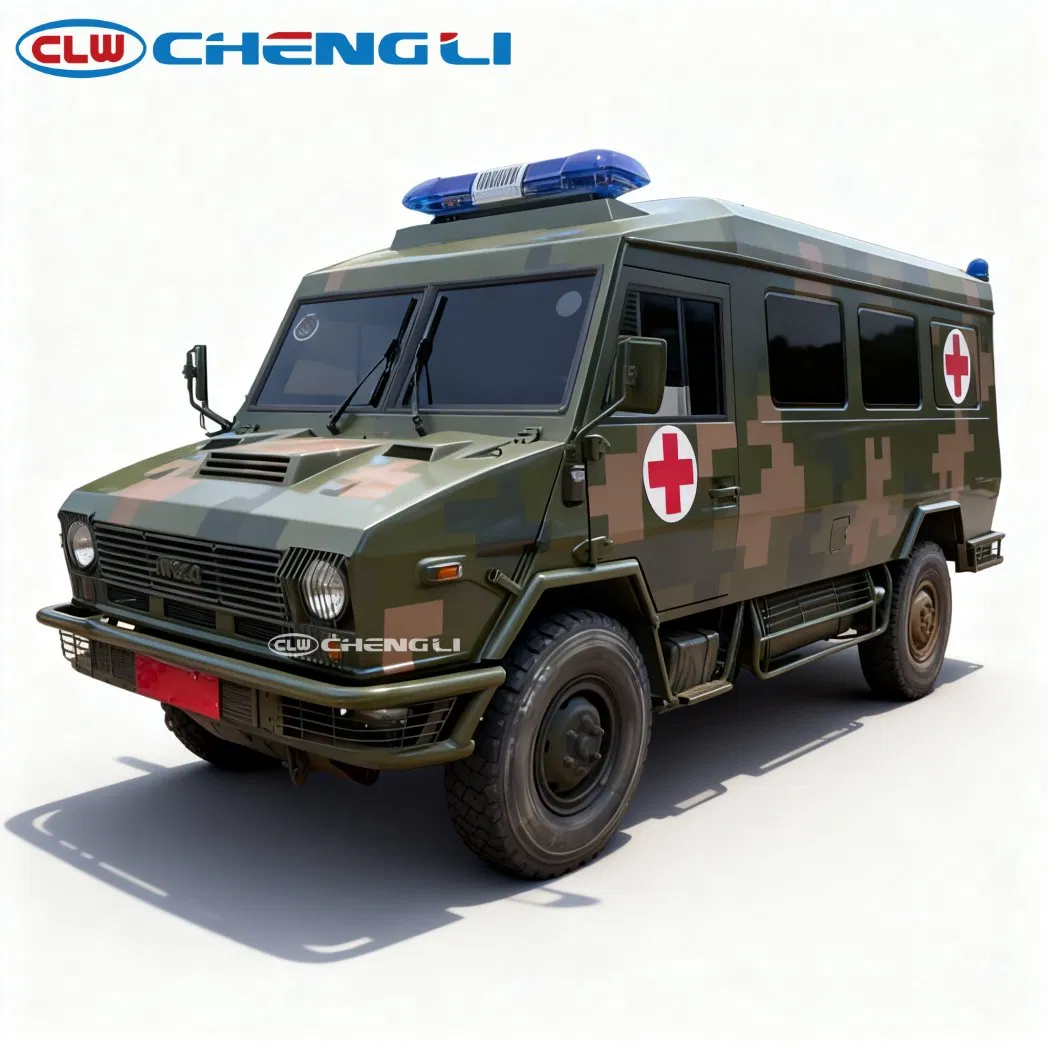
Iveco 4×4 Off-Road ICU Ambulance for Tanzania
A diesel 4×4 ambulance platform for remote access and rough-road projects where mobility must be balanced against height, weight, service and cost.
Core capabilities in operation
Translate vehicle and medical-cabin data into a real project decision. Final performance depends on route, patient-care role, installed equipment and the signed technical schedule.
| Parameter | Procurement meaning | Confirm before order | What changes the result |
|---|---|---|---|
| Iveco 4×4 chassis | Adds traction for rough roads and remote access where a 4×2 van may be operationally limited. | Validate route surface, gradient, seasonal access, loading height and recovery plan. | Tyres, ground clearance, driver training, axle load, weather and maintenance. |
| Ambulance conversion | Supports stretcher, oxygen and medical storage as a project-defined BLS or ALS layout. | Approve the clinical device list, crew layout, oxygen endurance and auxiliary power. | Patient acuity, transport duration, heat load, equipment mass and cabin space. |
Technical specifications
| Manufacturer | Chengli Special Automobile Co., Ltd. |
|---|---|
| Vehicle model | Iveco 4×4 Off-Road ICU Ambulance |
| Chassis | Iveco NJ2046GFC |
| Drive type | 4×4 |
| Fuel / energy | Diesel |
| Transmission | Manual |
| Wheelbase | 3310 mm |
| Overall dimensions | 5916 × 2100 × 2700 mm |
| Gross vehicle weight | 3855 kg |
| Steering side | RHD availability to confirm for selected chassis |
Published base data supports selection only. The signed chassis, conversion and medical-equipment schedules take precedence.
Medical cabin specifications
| Disinfection | Disinfection lamp stated; final hygiene method and operating procedure to define |
|---|---|
| Storage | Medical cabinets stated; retention and access to confirm |
| Stretcher | Stretcher stated in source category data; loading geometry and restraint evidence to confirm |
Oxygen system
| Confirmation | Capacity, number, regulator, outlets, ventilation and secure mounting to define |
|---|---|
| Scope | Oxygen cylinders stated in source category data |
Electrical system
| Confirmation | Battery autonomy, inverter, shore power, sockets and protection require load calculation |
|---|---|
| Scope | Auxiliary power must match the final BLS or ALS device package |
Safety and restraint configuration
| Recovery | Define recovery points, tyre specification and field support for the route |
|---|---|
| Vehicle Stability | Review loading height, centre of gravity and rollover risk for the finished vehicle |
Standard equipment
- Base vehicle: Chassis, steering side, powertrain and emissions as stated in the signed offer
- Ambulance conversion: Patient compartment, lighting, ventilation, storage and warning systems as itemised in the schedule
- Handover basis: Completed-vehicle inspection points, manuals and documents listed in the contract
Optional equipment
- Clinical devices: Monitor, ventilator, suction, AED and infusion equipment selected by project
- Power and communications: Additional battery, inverter, shore power, radio or tracking selected by project
- Climate and route package: Cooling, heating, tyres, recovery and spares selected for the operating environment
Configuration options and trade-offs
- 4×4 mobility: Improves difficult-route access but increases purchase cost, fuel use, height and maintenance demand.
- Patient loading height: Higher ground clearance helps rough-road access but can make stretcher loading more demanding.
- Medical payload: More devices and oxygen improve clinical scope but consume space and available vehicle payload.
Operating fit
Suitable conditions
- Remote districts with sustained rough-road exposure
- Disaster response and difficult-access emergency projects
- Buyers able to support a diesel 4×4 chassis and its maintenance needs
Not recommended for
- Routine paved-road transfer where 4×4 cost and loading height are not justified
- Projects without tyre, filter and chassis-service support
- Critical-care use without a signed equipment, oxygen and power schedule
Use 4×4 only when the route justifies it
This Iveco platform is intended for difficult access, but traction must be evaluated together with loading height, rollover risk, tyre availability, fuel use, workshop capability and the real frequency of off-road operation.
Freeze the RHD chassis identity, recovery equipment, medical layout, oxygen and power systems, cooling, spares and inspection evidence before production.
Frequently asked questions
Is the vehicle supplied as BLS or ALS?
The care level is defined by the signed equipment, oxygen, electrical and restraint schedule. The vehicle title alone is not an acceptance standard.
Can Chengli supply right-hand drive for Tanzania?
RHD status must be confirmed for the exact offered chassis and documented in the contract. Products marked as source-stated RHD retain that evidence note on this page.
Which documents are included?
The quotation should list vehicle, conversion, inspection, shipping and medical-device documents separately because the required package depends on the destination and supplied equipment.
Verification and procurement support
Vehicle data is mapped from the available product record. Final RHD chassis identity, emissions, patient-compartment layout, medical devices, documents and Tanzania destination requirements must be confirmed in the signed technical schedule.
- Base VehicleModel, chassis, drive, fuel, dimensions, GVW and wheelbase mapped from the source record
- ComplianceTanzania conformity and regulated-device responsibilities remain project-specific
- Images6 unique source-gallery URLs retained; image ownership and order-specific livery remain subject to confirmation
- Medical ScopeStretcher, oxygen cylinders, cabinets and disinfection lamp are source category data
- Steering SideRHD availability requires order-specific documentary confirmation